Frozen Storage in Saudi Arabia: The 2026 Cold Chain Handbook
Frozen storage in Saudi Arabia keeps food, pharmaceuticals, and other perishables safe from the point of production to the moment they reach a customer. As the Kingdom’s food imports, quick-commerce delivery, and healthcare sectors expand, reliable sub-zero warehousing has become a backbone of modern trade. This handbook explains how frozen storage works, what temperatures matter, and how to choose a partner in 2026.
Getting cold storage right is not just about buying freezer space. It is about protecting an unbroken cold chain, meeting Saudi food-safety rules, and controlling energy costs in a hot climate. Below, we walk through the essentials so importers, distributors, and food producers can make smart decisions.
Why Frozen Storage in Saudi Arabia Matters More Than Ever
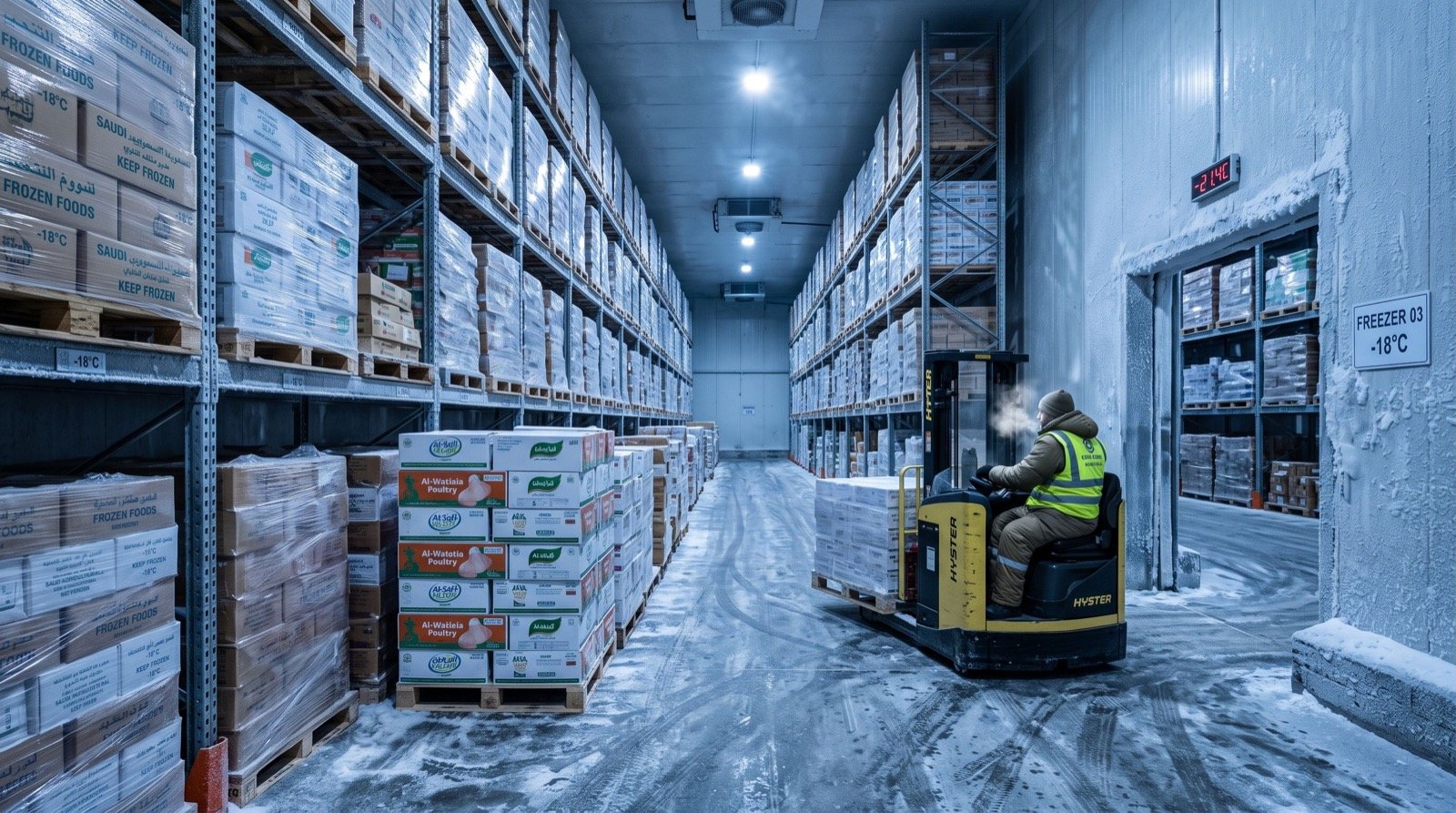
Saudi Arabia imports a large share of its food, and much of it travels frozen. From seafood and poultry to ready meals and ice cream, frozen goods depend on warehouses that hold steady sub-zero temperatures around the clock. A single lapse can spoil an entire shipment.
Demand keeps rising as online grocery and rapid delivery grow across Riyadh, Jeddah, and Dammam. Retailers now expect fast, temperature-controlled fulfilment, which puts pressure on operators to run efficient, well-monitored facilities. The right frozen storage partner turns that pressure into a competitive advantage.
Sectors that rely on frozen warehousing
- Food importers and distributors
- Restaurants and catering companies
- Pharmaceutical and vaccine logistics
- Seafood and meat processors
- Quick-commerce and grocery delivery platforms
Vision 2030 has pushed heavy investment into logistics and food security across the Kingdom. New distribution corridors between the Eastern Province, Riyadh, and the western ports rely on frozen hubs to keep goods moving. As a result, businesses that once treated cold storage as an afterthought now see it as a core part of their supply strategy. Planning frozen capacity early gives importers and distributors a real edge over slower rivals.
Understanding Temperature Zones and the Cold Chain
Not every perishable needs the same temperature. Frozen storage sits at the coldest end of the spectrum, but a full cold chain uses several zones. Matching each product to the correct range preserves quality and prevents waste.
| Storage Type | Typical Temperature | Common Products |
|---|---|---|
| Deep frozen | -25 C to -18 C | Ice cream, seafood, long-term frozen stock |
| Frozen | -18 C | Meat, poultry, ready meals |
| Chilled | 0 C to 4 C | Dairy, fresh produce, vaccines |
| Ambient | 15 C to 25 C | Canned goods, dry stock |
The globally recognized frozen benchmark is -18 C or colder, a standard reinforced by the Food and Agriculture Organization of the United Nations. Holding that temperature consistently is what stops bacterial growth and preserves texture and taste. For goods that sit just above freezing, providers often pair frozen rooms with Chilled Storage so mixed loads stay compliant.
How to Choose a Frozen Storage Provider
Selecting the right facility protects both your products and your reputation. Price matters, but consistency and compliance matter more. Use the checklist below when you compare options.
- Verify temperature monitoring with continuous data logging and alarms.
- Confirm backup power so freezers never fail during outages.
- Check food-safety certifications and hygiene audits.
- Ask about traceability and inventory management systems.
- Review location relative to your suppliers and delivery routes.
Experienced operators document every step, from receiving to dispatch. Choosing trusted professionals in any field comes down to the same principle: proven processes and clear accountability. Ask for references and sample temperature reports before you commit.
Managing Energy Costs in a Hot Climate
Running freezers in Saudi Arabia’s heat consumes significant energy. Smart facility design keeps costs down without risking product safety. Look for providers that invest in efficiency, because those savings often pass through to your rates.
- High-performance insulation on walls, floors, and doors
- Rapid-close doors and air curtains at loading bays
- Variable-speed compressors that match cooling to demand
- Regular maintenance to keep systems running efficiently
- Solar or off-peak power to offset daytime loads
Efficient operators also plan for redundancy. If one compressor fails, another takes over, and backup generators cover grid outages. That resilience is essential when a few hours of warmth can ruin a warehouse full of frozen goods.
Compliance and Food Safety in 2026
Saudi authorities enforce strict standards for storing and transporting food. Facilities must meet hygiene, labelling, and temperature requirements, and they must keep records that inspectors can review. Working with a compliant provider shields your business from fines and recalls.
Good facilities treat compliance as a daily habit, not a once-a-year event. They train staff, calibrate sensors, and audit their own processes. When you also handle products that need a warmer profile, blending frozen rooms with Frozen Storage in Saudi Arabia and chilled space keeps every item within its legal range.
Traceability is now a baseline expectation rather than a bonus. Barcode and lot tracking let you recall a specific batch quickly if a supplier flags an issue, which limits waste and protects customers. Ask potential partners how they record incoming shipments, how long they retain temperature logs, and how fast they can pull a report during an inspection. Providers with mature systems answer these questions without hesitation.
Finally, plan for growth. A facility that suits your volume today may strain during peak import seasons or a product launch. Choose a partner with room to scale, clear pricing for additional pallets, and the operational discipline to keep every zone within spec even at full capacity.
Frequently Asked Questions
What temperature counts as frozen storage?
Frozen storage holds products at -18 C or colder. Deep-frozen goods such as ice cream and seafood may need -25 C to preserve quality. Maintaining that range without fluctuation is what keeps food safe over time.
How is frozen storage different from chilled storage?
Frozen storage keeps products below freezing at -18 C or lower, while chilled storage holds items between 0 C and 4 C. Frozen suits meat and seafood, whereas chilled suits dairy, produce, and many pharmaceuticals.
What happens during a power outage?
Reputable facilities use backup generators and redundant compressors so temperatures stay stable during outages. Ask any provider how quickly backup power activates and whether alarms alert staff to any deviation.
Can one facility store frozen and chilled goods together?
Yes. Many Saudi facilities offer separate temperature zones under one roof, letting you store frozen, chilled, and ambient products in the correct conditions. This simplifies logistics and keeps mixed shipments compliant.
Final Thoughts
Frozen storage in Saudi Arabia underpins a growing food and healthcare economy, and choosing the right partner protects both product and profit. Prioritise consistent temperatures, backup power, and documented compliance. With careful planning in 2026, your cold chain stays unbroken from warehouse to customer.